July 29, 2026
Compass Fires Shots At Zillow, Says exposure cut sale-to-list ratios by 1.3%
Compass is making bold claims that broad portal exposure actually hurts sale-to-list ratios. Here is what agents need to know about the debate and how to protect your sellers.
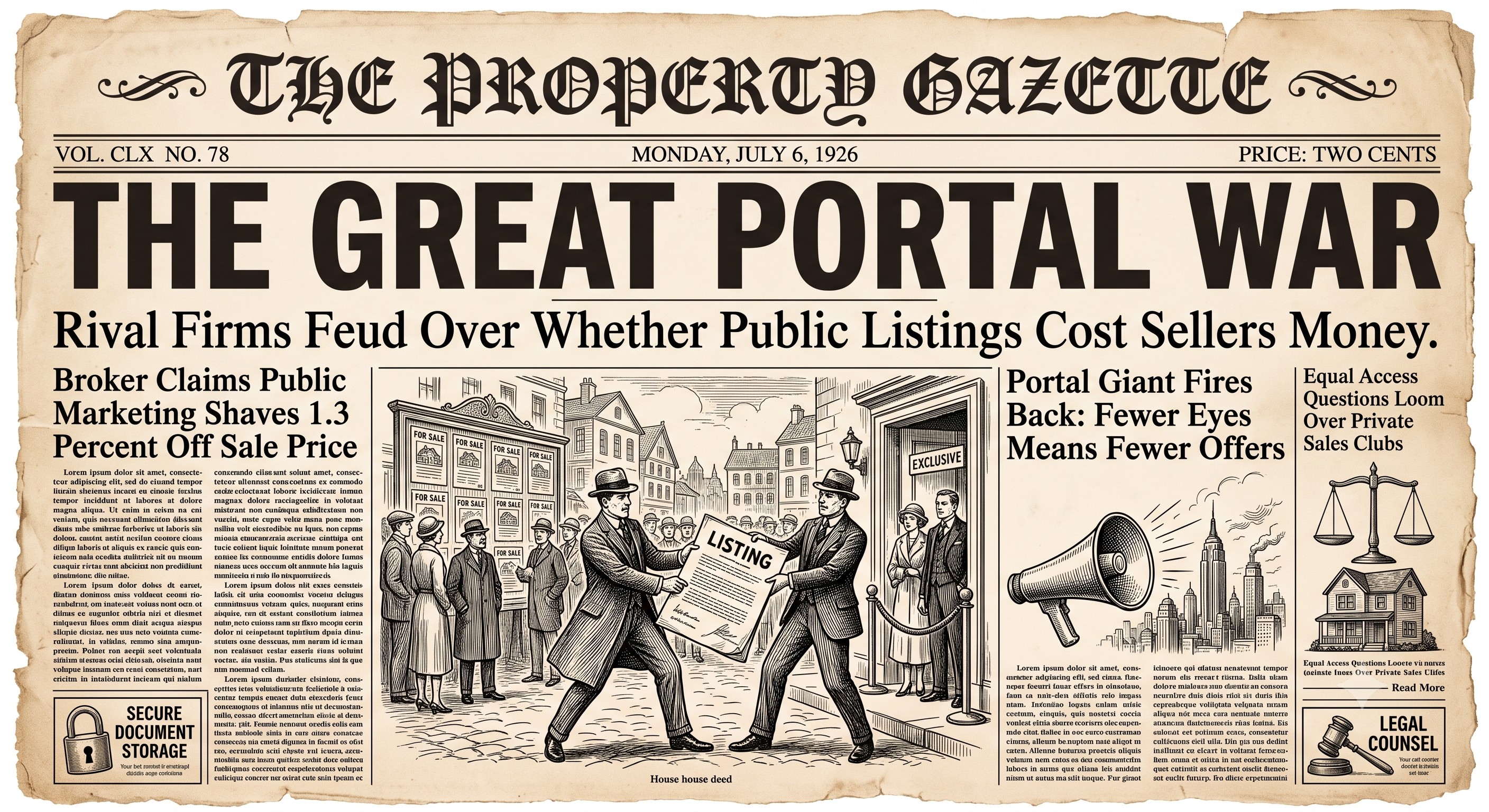
A New Front in the Portal Wars
The real estate industry is no stranger to debate about where and how listings should be marketed. But the conflict between Compass and Zillow has escalated into something agents everywhere need to pay close attention to. Compass has publicly claimed that broad portal exposure - specifically, syndicating listings to major public-facing portals - reduces sale-to-list price ratios by approximately 1.3 percentage points.
That is a significant claim. On a $500,000 home, a 1.3% reduction translates to roughly $6,500 left on the table. If the assertion holds up to scrutiny, it would force every agent and brokerage to rethink how they bring listings to market.
What Compass Is Actually Arguing
The core of the Compass argument is straightforward: when a listing hits a major public portal immediately, it signals days-on-market from day one. Buyers and their agents watch those numbers closely. A property that sits - even briefly - can attract lowball offers and create the perception that something is wrong, even when nothing is.
Compass has been pushing its Private Exclusive and Coming Soon programs as an alternative. The idea is that building demand privately, among a curated network of buyers and agents, creates competitive pressure before the home goes broadly public. When it does hit the open market, the argument goes, it already has momentum and potentially multiple interested parties.
Zillow, for its part, has pushed back hard. The company argues that limiting exposure harms sellers by reducing the pool of potential buyers and that maximum exposure is always in the seller's best interest. Zillow has also raised fair housing concerns, suggesting that off-portal marketing strategies could - intentionally or not - limit access to housing information in ways that disadvantage certain buyers.
The Fair Housing Dimension
This is where agents need to be especially careful. Any marketing strategy that, in practice, channels listing information to a select group of people while excluding others raises questions worth asking out loud. As an agent, your fiduciary duty is to your seller - but that duty exists within a legal and ethical framework that includes fair housing law.
Before adopting any private or phased marketing strategy, make sure you can clearly explain to your seller why it serves their financial interest, and make sure your approach does not create unequal access based on any protected class. Document your reasoning. Consult your broker and, if needed, legal counsel.
What the Data Debate Means in Practice
Here is the honest answer: the industry does not yet have a universally agreed-upon, peer-reviewed study that definitively proves or disproves the 1.3% figure. Compass drew on its own transaction data. Zillow disputes the methodology. Independent researchers have produced mixed findings depending on the market, price point, and time period studied.
What agents should take away is not a firm conclusion but a sharper question to ask with every listing: What is the right go-to-market strategy for this specific property, in this specific market, right now?
That question has always been worth asking. The Compass-Zillow fight just made it impossible to ignore.
How to Have This Conversation With Sellers
Sellers are going to hear about this debate. Many already have. Here is how to approach it professionally:
- Present the range of options clearly. Explain Coming Soon periods, broker network previews, and full public portal syndication - including the potential trade-offs of each.
- Use local data, not national headlines. What works in a low-inventory urban market may not apply in a suburban market with longer average days on market. Pull your own comparable sales data.
- Put the choice in the seller's hands. Document whatever strategy the seller chooses and why. Your job is to advise, not to decide unilaterally.
- Stay current on MLS rules. Many MLS organizations have their own clear-cooperation policies that govern how long a listing can be marketed privately before it must be submitted. Know your local rules cold.
The Bigger Takeaway for Brokerages
For brokerage owners and team leaders, the Compass-Zillow clash is a signal that the listing marketing conversation is changing fast. Agents on your roster need training - not just on tactics, but on how to explain trade-offs to sellers in a compliant, client-first way.
Platforms that give agents real-time performance data on their listings - views, saves, showing requests, price-to-original-list tracking - put agents in a much stronger position to make data-backed recommendations rather than relying on one side's marketing claims.
Bottom Line
The 1.3% figure Compass is citing may be contested, but the underlying question it raises is legitimate: does the timing and channel of exposure affect final sale price? Smart agents are not waiting for a definitive industry verdict. They are building the skills to evaluate each listing on its own merits, have honest conversations with sellers about strategy, and document their decisions carefully.
That is good practice regardless of who wins the portal wars.
This article brough to you by Real Estate Genie™ - The Realtor OS
See what Real Estate Genie can do for your business
Book a demoKeep exploring
Brought to you by Real Estate Genie™, The Realtor OS. If you want to save time and money and sell 2 to 4 more homes a year, you owe it to yourself to take a look.