August 6, 2026
What the Compass 'Zillow Tax' Study Means for Brokers Who Care About Seller Outcomes
Compass released internal research claiming that listings appearing on Zillow sold for 1.3% less than comparable listings that did not. Here is what independent brokers need to understand about the study, the legal backdrop, and how your firm's tools shape seller results.
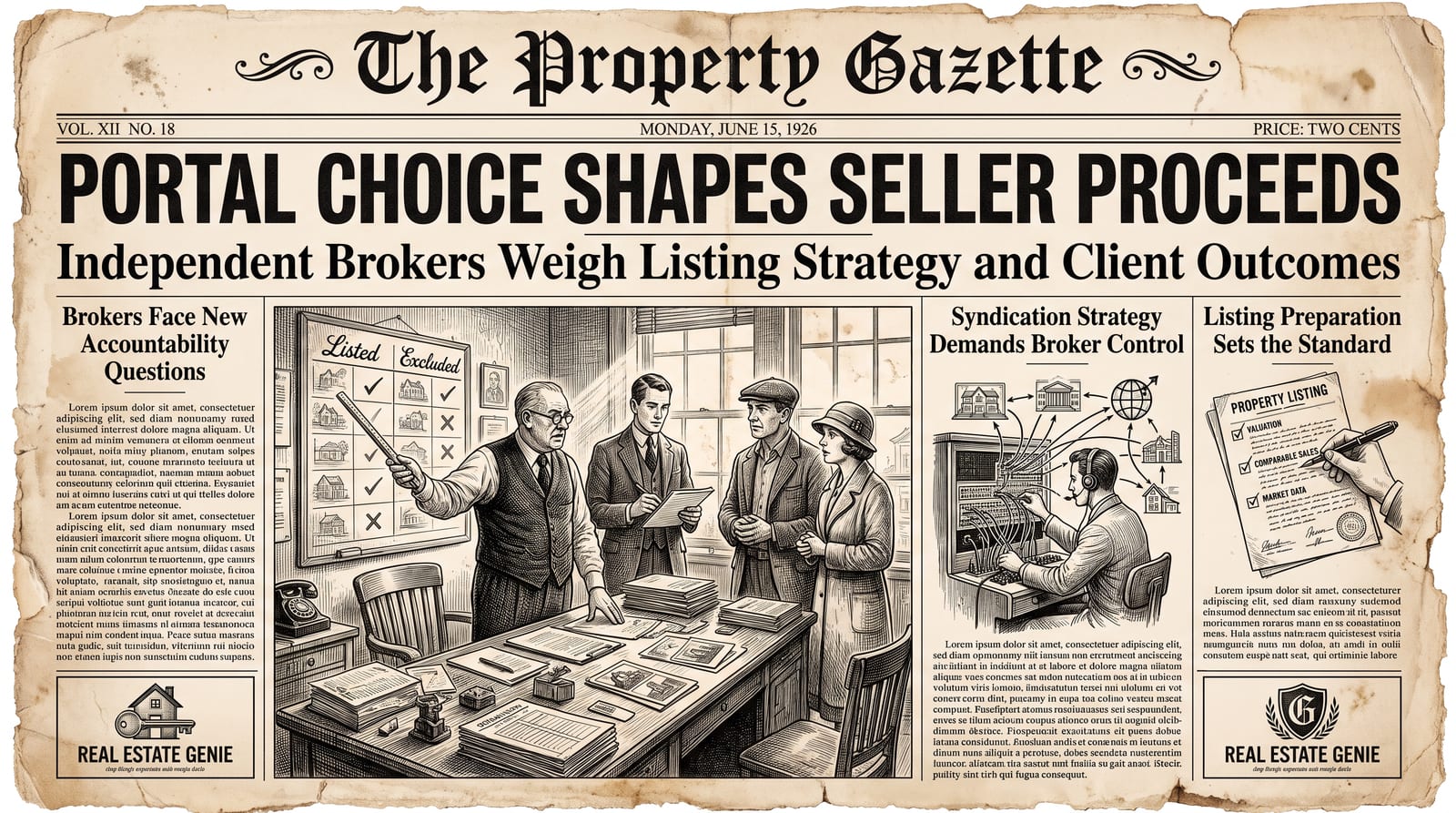
A Study That Has the Industry Talking
Compass International Holdings recently released internal research claiming that homes appearing on Zillow sold for roughly 1.3% less than comparable listings that did not appear on the portal. The firm calls this gap the "Zillow Tax." The analysis, led by Compass chief economist Mike Simonsen and chief data officer Dave Crosby, examined 296,966 Compass listings posted between January 2025 and May 2026.
Of those listings, 806 were "banned" from appearing on Zillow. The median sale-to-list price ratio for those banned listings was 100%, compared with 98.7% for the rest. On a $1 million home, that 1.3% difference translates to roughly $13,000 in seller proceeds.
The research comes during an active legal dispute between the two firms. After Zillow's Listing Access Standards policy went into effect last June, Compass filed an antitrust lawsuit against the portal, alleging that Zillow was using market power in a way that harms competition. The study should be read with that context in mind: it is advocacy research produced by a party with a direct financial stake in the outcome. Independent verification has not been completed, and details of the broader legal matter are still emerging.
That said, the questions the study raises are legitimate ones for any broker who is accountable for client outcomes.
What This Actually Asks Brokers to Think About
Whether or not you accept every figure in the Compass analysis, the underlying question is real: does the channel mix your agents use to market a listing affect the price a seller nets?
That question matters more for independent brokers than it might seem. According to the NAR 2025 Profile of Real Estate Firms, 81% of firms operate a single office, and the average residential firm has just 2 full-time licensees on roster. Firms that size cannot afford a compliance mistake, a dissatisfied seller, or the reputational damage that follows either one.
If your agents are defaulting to a single syndication path because that is the easiest button to push, you may not know whether that default is producing the best outcomes for your clients. That is a risk and a liability question, not just a marketing question.
The Listing Marketing Problem Is Bigger Than One Portal
The Compass study focuses narrowly on one platform, but the broader challenge for brokers is that listing exposure strategy has grown genuinely complicated. Agents are juggling MLS timing, private listing networks, portal syndication choices, social promotion, and local outreach, often without consistent guidance from the broker level.
The result is inconsistency across your roster. One agent runs a tight pre-market campaign. Another clicks "syndicate everywhere" and moves on. Neither approach is tracked or compared, so you have no data to coach from.
This is exactly where having an integrated platform matters. When your agents work inside a single system, the broker gets visibility. You can see how listings are being marketed before they go live, catch gaps in strategy early, and ensure that your firm's standards are applied consistently across every transaction.
What Good Listing Preparation Actually Looks Like
Regardless of which portals a listing ultimately appears on, the quality of the preparation behind it determines how well it performs. Here is what brokers should expect their platform to support:
- Property intelligence in one view. Before an agent prices or markets a home, they should be able to pull a complete briefing on the property, including valuation context, comparable sales, and market conditions, without logging into three separate systems. Real Estate Genie's valuation tools put that briefing in one place.
- AI-assisted drafting. Remarks, disclosures, and marketing copy take time. Hoku, the AI copilot built into Real Estate Genie, handles the drafting so agents spend their time on strategy and relationships.
- Consistent listing presentation. Professional listing sites, social content, and video assets should not be optional extras that only top producers use. They should be defaults available to every agent on your roster.
- Nightly opportunity awareness. Knowing which sellers in your market are most likely to list before they publicly announce it gives your agents a chance to have the right conversation at the right time, ahead of the crowd.
The Cost Conversation Belongs at the Broker Level
According to the NAR 2025 Profile of Real Estate Firms, 36% of firms cite rising industry costs as a top challenge over the next two years. Independent brokers are already stretching every dollar across contracts and forms, e-signature, MLS access, and CMA tools. Adding a separate listing marketing platform, a separate AI tool, and a separate analytics dashboard compounds the problem.
Real Estate Genie consolidates the tools your firm already provides into one platform, at one price, with the intelligence layer built in. That means your agents get corporate-grade resources, and you get one bill instead of five. See how the pricing works for firms your size.
The Takeaway for Independent Brokers
The Compass "Zillow Tax" study will continue to generate headlines, and the legal dispute between the two firms will likely surface new details over the coming months. What it should not do is distract you from the operational question you can actually control: does every agent on your roster have the tools and the guidance to market every listing as well as possible?
That is a brokerage infrastructure question. And it is one that Real Estate Genie was built to answer.
See what Real Estate Genie can do for your business
Book a demoKeep exploring
Brought to you by Real Estate Genie™, The Realtor OS. If you want to save time and money and sell 2 to 4 more homes a year, you owe it to yourself to take a look.