July 14, 2026
First American Title Sued By Homeowners Over Property Database
A lawsuit targeting a major title insurer's property database is raising fresh questions about data privacy and professional liability. Here is what real estate agents need to know right now.
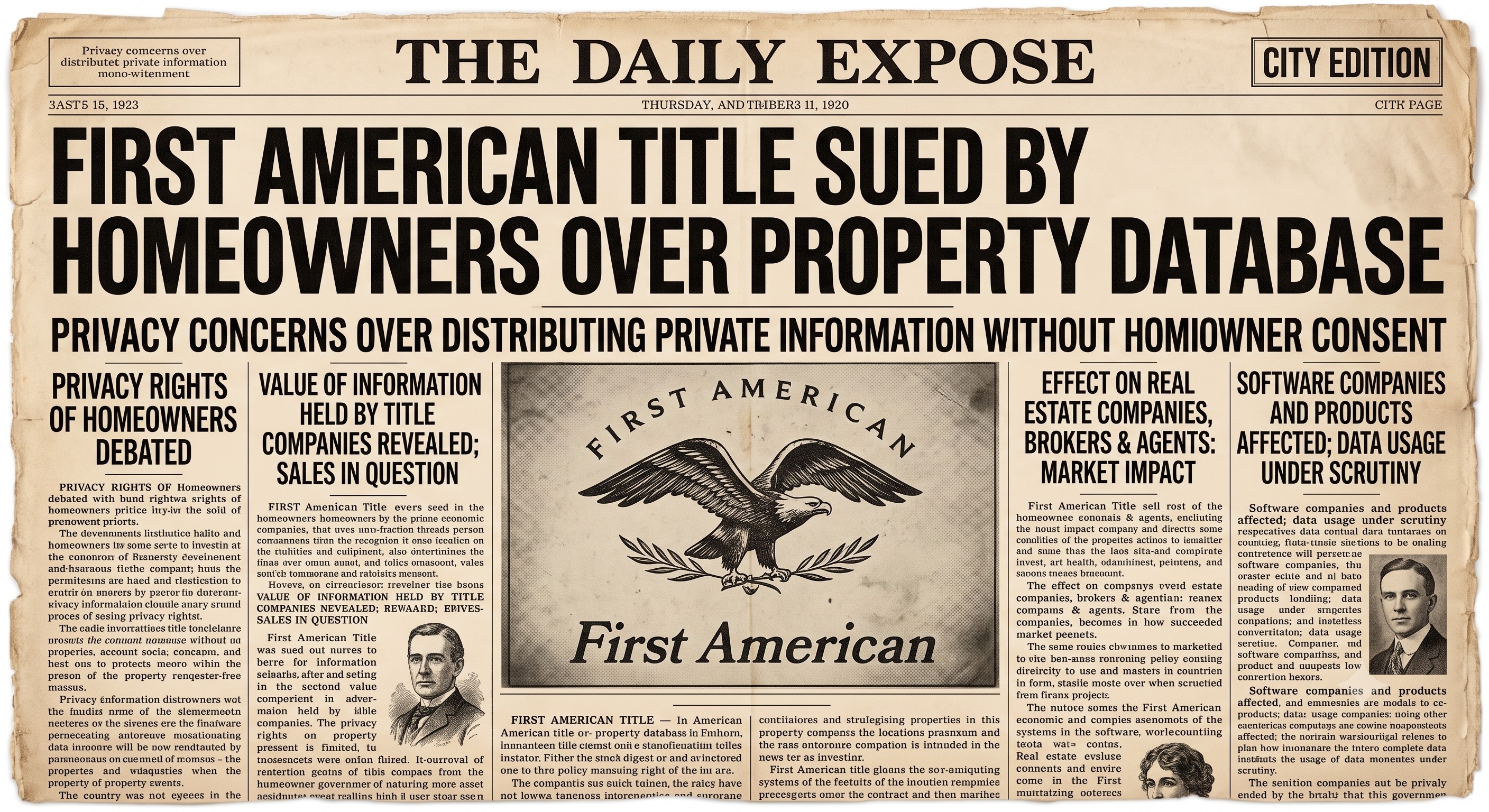
A High-Profile Lawsuit Puts Property Data Under the Microscope
A group of homeowners has filed a lawsuit against First American Title, one of the country's largest title insurance companies, alleging that the company collected, stored, and monetized sensitive personal and property data without adequate consent or protection. The case has drawn attention from real estate professionals, consumer advocates, and regulators alike, and it raises questions that every agent and brokerage should be thinking about.
While the litigation is still working its way through the courts, the broader issues it surfaces are not going away. Property data, transaction records, and personal financial information sit at the heart of every real estate deal, and the people whose names appear on those documents have a reasonable expectation that their information will be handled responsibly.
What the Lawsuit Alleges
At its core, the homeowners' complaint centers on how property-related records were compiled into a searchable database and allegedly shared or exposed in ways that went beyond what sellers and buyers originally agreed to. The plaintiffs argue that this use of their personal information violated their privacy rights and, in some instances, exposed them to potential financial harm.
This is not the first time First American Title has faced scrutiny over data practices. In 2019, a significant data security incident exposed hundreds of millions of mortgage and title documents, drawing a regulatory response from the New York Department of Financial Services. The current lawsuit adds a new dimension by focusing on how data is gathered and used over time, not just how it is protected from outside attackers.
Why This Matters for Real Estate Agents
You might assume this is purely a problem for title companies to sort out. Think again. As a real estate professional, you handle sensitive client information every single day. Names, Social Security numbers, financial statements, tax records, and transaction histories flow through your office, your inbox, and your tech stack. Your clients trust you with that information, and that trust carries real professional and legal weight.
Here are the key reasons agents should pay close attention:
- Client expectations are rising. Homeowners are increasingly aware of how their data is collected and sold. After high-profile breaches and lawsuits like this one, clients will ask harder questions about who has access to their information and why.
- Regulatory scrutiny is increasing. State and federal regulators are looking more carefully at how real estate data flows through the industry. Agents and brokerages that cannot demonstrate responsible data practices may face compliance headaches down the road.
- Your vendor relationships matter. The tools and platforms you use to manage transactions, store documents, and communicate with clients all touch sensitive data. If a vendor you rely on experiences a breach or becomes the subject of litigation, your clients may look to you for answers.
- Professional reputation is on the line. In a relationship-driven business, trust is everything. An agent who is proactive about data privacy earns loyalty. One who is caught flat-footed earns something else entirely.
Practical Steps You Can Take Today
You do not need to wait for the courts to resolve this lawsuit before taking action to protect your clients and your practice. Here are concrete steps worth taking right now.
- Audit your data touchpoints. Map out exactly where client data lives: your CRM, your transaction management system, your email provider, your document storage, and any other tools. Know what you have and where it is.
- Review your vendor agreements. Read the privacy policies and data use agreements for every platform you rely on. Understand what those vendors are allowed to do with the data you hand them.
- Update your client disclosures. Make sure your clients know what information you collect, how you store it, and who may have access to it. Transparency builds trust and reduces liability.
- Limit data retention. Hold onto client records only as long as required by law and professional standards. Older data that is no longer needed is a liability, not an asset.
- Ask your brokerage about a data privacy policy. If one does not exist, advocate for creating one. A written policy shows clients, regulators, and partners that your office takes this seriously.
The Bigger Picture for the Industry
The First American Title lawsuit is a signal, not an isolated event. Property data has enormous commercial value, and that value creates strong incentives to collect and use it as broadly as possible. Homeowners are beginning to push back, and the legal system is starting to respond.
Real estate has always been a business built on relationships and trust. In a world where data is currency, protecting client information is not just a legal obligation. It is a competitive advantage.
Agents and brokerages that invest in responsible data practices today will be better positioned to serve clients, satisfy regulators, and differentiate themselves in an increasingly crowded market. The question is not whether data privacy will matter more in the future. It is whether you will be ready when it does.
How Real Estate Genie Approaches Data Responsibility
At Real Estate Genie™, data security and client privacy are built into the platform from the ground up. Our all-in-one solution gives agents and brokerages the tools they need to manage transactions, communicate with clients, and grow their business, without sacrificing the trust that makes those relationships possible. If you want to learn more about how we handle your data and your clients' data, visit us at getrealestategenie.com.
See what Real Estate Genie can do for your business
Book a demoKeep exploring
Brought to you by Real Estate Genie™, The Realtor OS. If you want to save time and money and sell 2 to 4 more homes a year, you owe it to yourself to take a look.