August 10, 2026
Hidden real estate fees cost consumers $2 billion a year
A recent study estimates that unnecessary 'junk' fees in real estate transactions drain consumers of roughly $2 billion each year. Here is what agents and brokerages can do to stay ahead of the issue.
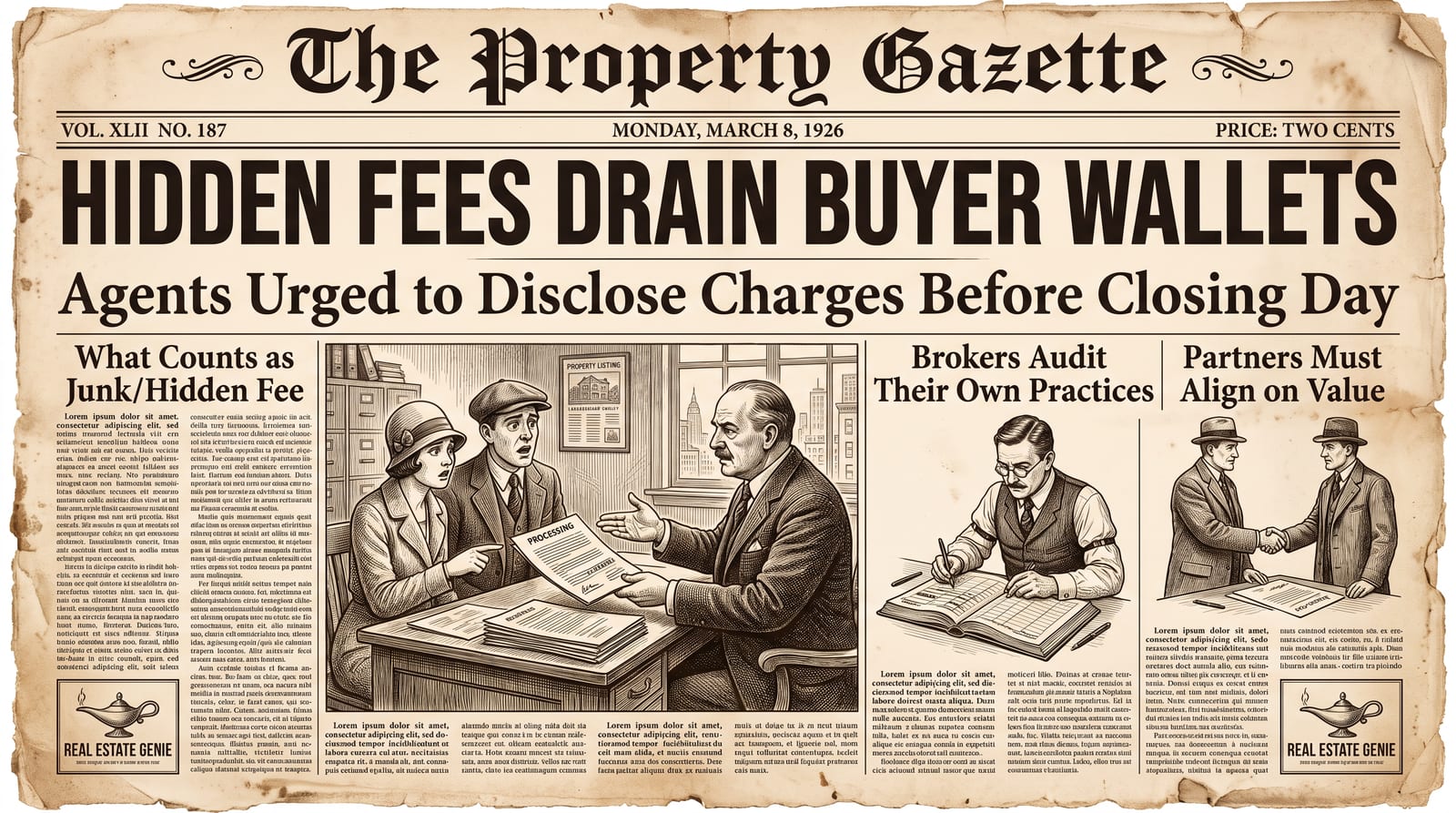
The $2 Billion Problem Hiding in Plain Sight
A recent study made headlines by estimating that so-called "junk" fees embedded in real estate transactions cost American consumers approximately $2 billion every year. These are fees that appear at or near closing with little explanation, no clear service attached, and no prior disclosure - think administrative processing charges, document preparation fees, and vaguely labeled transaction costs that buyers and sellers never agreed to upfront.
For real estate agents and brokerages, this is not just a consumer protection headline. It is a direct threat to client trust, referral pipelines, and long-term business reputation. Understanding the issue and responding proactively is one of the smartest moves you can make right now.
What Qualifies as a "Hidden" Fee?
The term covers any charge that is duplicative, poorly disclosed, or hard to justify with a real service. In a typical real estate transaction, these can show up from multiple directions - lenders, title companies, settlement agents, and yes, sometimes brokerages themselves. Common examples include:
- Administrative or processing fees charged on top of a commission with no itemized explanation
- Document preparation fees that duplicate what another party is already charging
- Technology or platform fees described in vague terms on a closing disclosure
- Courier or overnight fees in transactions that were entirely digital
The core problem is not always the dollar amount. It is the surprise. Consumers who feel ambushed by fees at the closing table are far less likely to refer friends and family, leave positive reviews, or come back for their next transaction.
Why This Matters More Than Ever for Agents
The real estate industry is already navigating a period of heightened scrutiny around commissions, compensation transparency, and consumer advocacy. Regulators at the federal and state level have signaled ongoing interest in fee disclosure practices across the housing market.
Agents who treat transparency as a core part of their value proposition will stand out. Agents who do not may find themselves fielding uncomfortable questions at the closing table - or worse, online.
Clients who fully understand what they are paying for before they sign anything are the clients who become your biggest advocates afterward.
What Agents and Brokerages Can Do Right Now
1. Audit Every Fee You Charge
Start with your own transaction fee sheet. Can you clearly explain every line item to a client in plain language? If a fee exists because it has always been there, that is not a good enough reason. Remove or rename anything that cannot be justified with a concrete service delivered.
2. Disclose Early and in Writing
Do not wait until the closing disclosure to surface fees. Walk clients through your complete fee structure at the listing appointment or buyer consultation. Put it in writing. This single habit eliminates most of the friction that leads to complaints and bad reviews.
3. Coach Clients to Review All Third-Party Fees
Your job does not end with your own disclosures. Help buyers and sellers understand how to read a loan estimate and a closing disclosure. Flag line items that seem duplicative or unclear and encourage them to ask questions. Clients see this as advocacy, and advocacy builds loyalty.
4. Use Technology to Create a Paper Trail
Modern transaction management tools allow agents to document every fee conversation, share itemized estimates early in the process, and get written acknowledgment from clients. This protects both parties and reinforces a culture of transparency inside your brokerage.
5. Align With Partners Who Share Your Standards
The lenders, title companies, and settlement agents you refer clients to reflect on your brand. Have direct conversations with your preferred partners about their fee practices. Refer to those who disclose clearly and compete on value, not confusion.
The Business Case for Transparency
Some agents worry that a thorough fee conversation will cost them deals. The opposite tends to be true. Research in consumer behavior consistently shows that people are more willing to pay a fair price when they understand exactly what they are getting. Clarity reduces friction. Friction kills deals.
Brokerages that build a reputation for honest, upfront pricing attract the kind of clients who close, refer others, and come back. That compounding effect is worth far more than any short-term gain from a buried fee.
The Bottom Line
The $2 billion figure tied to junk real estate fees is a wake-up call for the entire industry. But for agents and brokerages who are already committed to honest, client-first practices, it is also an opportunity. When the market is scrutinizing fees, the professionals who lead with transparency do not just survive the conversation - they win it.
Real Estate Genie is built to help agents and brokerages operate with exactly this kind of clarity, from client communication and transaction management to integrated tools that keep every stakeholder informed from contract to close. Learn how Real Estate Genie can help your business build the trust that drives long-term growth.
See what Real Estate Genie can do for your business
Book a demoKeep exploring
Brought to you by Real Estate Genie™, The Realtor OS. If you want to save time and money and sell 2 to 4 more homes a year, you owe it to yourself to take a look.