August 14, 2026
SEC Filings Show Remax Considered .Selling To Other Brokers
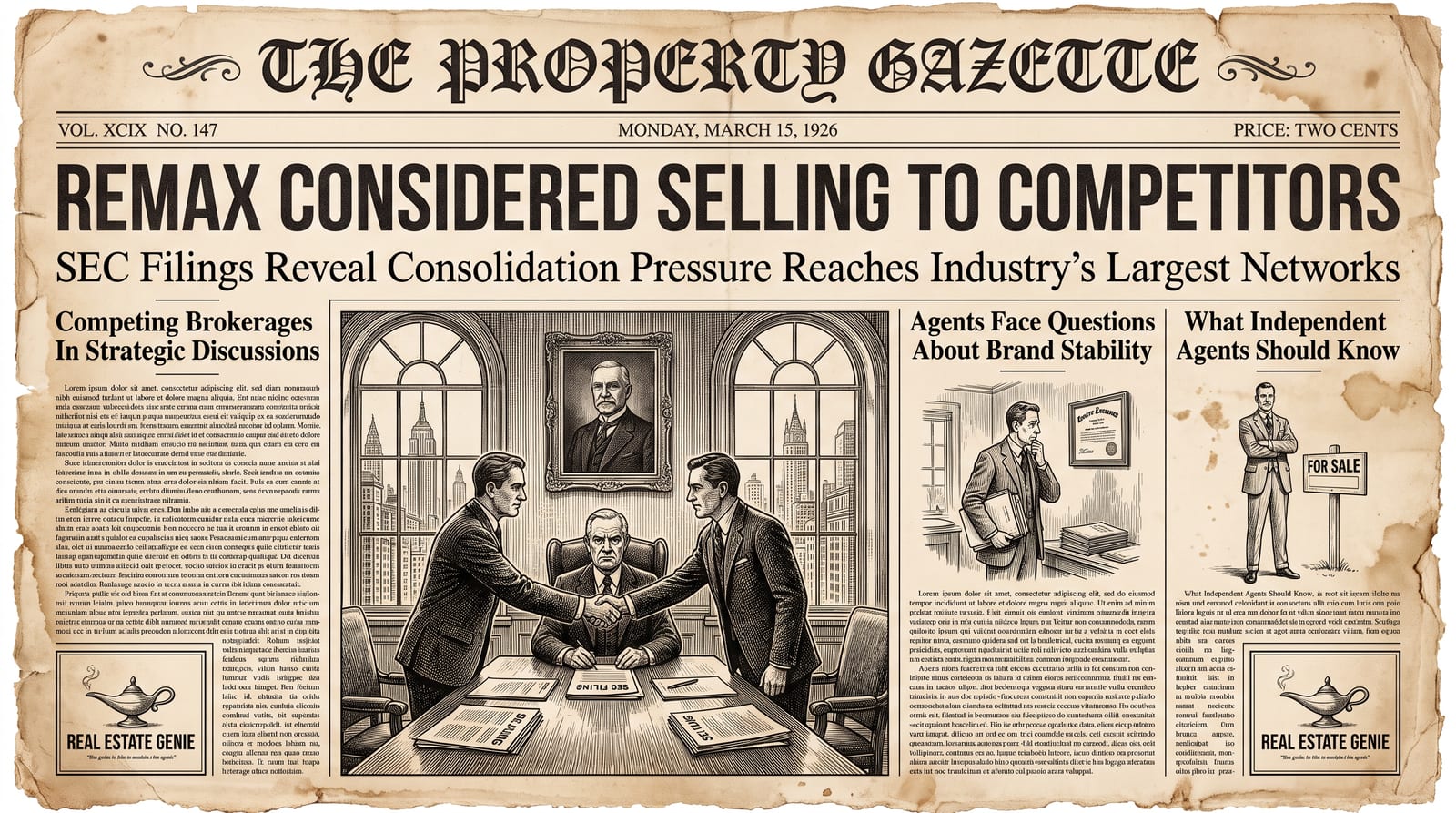
Newly surfaced SEC filings show RE/MAX leadership considered selling the company to competing brokerages, raising big questions about franchise stability and what agents should look for in a long-term real estate home.
A Surprising Disclosure From the Top
When a publicly traded real estate franchisor files documents with the Securities and Exchange Commission, those filings become part of the public record - and sometimes they contain revelations that ripple across the industry. Recent SEC disclosures have shown that RE/MAX Holdings explored the possibility of selling the company to rival brokerages, pulling back the curtain on how even the largest franchise networks think about their futures.
For the hundreds of thousands of agents and brokers affiliated with major franchise brands, this kind of news is more than a business headline. It raises legitimate questions about stability, culture, and whether the brand you hang your license under will look the same in five years.
What the Filings Actually Indicate
SEC filings related to mergers, acquisitions, and strategic alternatives are standard for public companies. When a board of directors instructs leadership to explore strategic options - including a potential sale - they are required to disclose that process to shareholders. The RE/MAX filings reportedly show that conversations with competing brokerage organizations were part of that exploration.
This does not necessarily mean a deal was close or that one is imminent. Boards explore strategic alternatives regularly, and most explorations never result in a transaction. However, the fact that rival brokerages were involved in those conversations signals that the consolidation pressure building across the real estate industry is very real - and it is reaching the very top of the franchise model.
Why Brokerage Consolidation Is Accelerating
The real estate industry has been under significant financial pressure from multiple directions:
- Commission structure changes driven by recent industry litigation and settlement agreements have forced brokerages to rethink revenue models.
- Rising technology costs mean that brokerages must invest heavily in tools, platforms, and data just to remain competitive.
- Agent retention battles have intensified as independent and tech-forward brokerages compete aggressively on splits, tools, and support.
- Interest rate headwinds have compressed transaction volume, squeezing the royalty and fee income that franchise networks depend on.
Against that backdrop, even iconic brand names are weighing their options. Consolidation often looks attractive when organic growth slows and the cost of staying independent rises.
What This Means for Franchise Agents
If you are currently affiliated with a major franchise brand, news like this is worth paying attention to - even if no immediate change is on the horizon. Here are the practical questions every agent should be asking:
What happens to my brand if ownership changes?
Ownership transitions can bring new leadership priorities, changes to fee structures, shifts in technology investment, and cultural shifts. Agents who have built their identity around a specific brand name may find that the brand evolves in ways they did not anticipate.
Am I building equity in my own business or the brand's?
One of the most important distinctions in real estate is whether your business can survive independently of the flag you fly. Agents who invest in their own database, reputation, marketing, and client relationships are far better positioned to weather any ownership or brand change than those who rely entirely on the franchisor's systems and leads.
Does my current brokerage give me the tools to thrive independently?
Regardless of brand affiliation, the technology and support a brokerage provides matters enormously. Agents should evaluate whether their platform helps them build lasting client relationships, manage their pipeline efficiently, and market themselves - not just the brand.
The Case for Brokerage-Agnostic Stability
The agents who navigate industry disruption best tend to share a few traits. They own their client data. They communicate consistently with their sphere. They use tools that work for them regardless of what flag is on the door. And they choose their brokerage based on the genuine support and resources it provides - not just name recognition.
Real Estate Genie was built with exactly that kind of agent in mind. Our platform gives agents and brokerages a complete, integrated set of tools - from CRM and lead management to MLS connectivity, marketing automation, and transaction support - so your business belongs to you, not to a brand that may look very different a few years from now.
The agents who thrive through consolidation cycles are the ones who have invested in their own business infrastructure, not just borrowed someone else's.
Keep Watching the Market - And Plan Accordingly
The RE/MAX SEC filing story is a reminder that no brand is too big to change direction. Healthy skepticism about any franchisor's long-term stability is not disloyalty - it is good business thinking. Smart agents treat their affiliation as one part of their business strategy, not the whole thing.
Whether you are evaluating your current brokerage, considering independence, or simply looking to strengthen your own business foundation, now is a good time to audit your tools, your client relationships, and how much of your success is truly portable.
The real estate market will always go through cycles. The agents who come out ahead are those who build something that lasts - with or without a particular brand behind them.
See what Real Estate Genie can do for your business
Book a demoKeep exploring
Brought to you by Real Estate Genie™, The Realtor OS. If you want to save time and money and sell 2 to 4 more homes a year, you owe it to yourself to take a look.