August 21, 2026
Sitzer | Burnett Decision Upheld By Appeals Court
A federal appeals court has upheld the landmark Sitzer | Burnett verdict, cementing major changes to how buyer's agent compensation works. Here is what agents and brokerages need to understand to stay compliant and competitive.
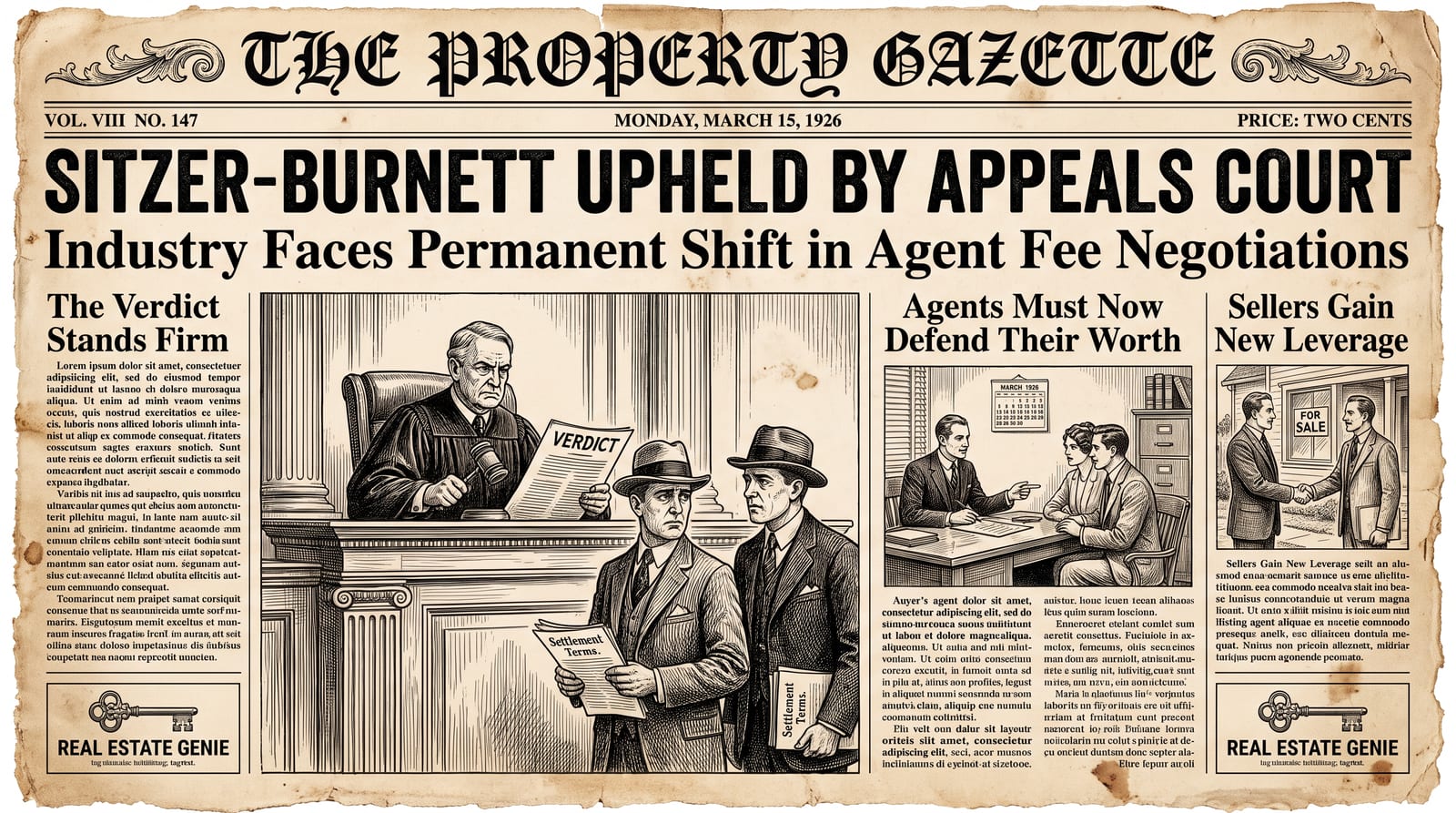
The Appeals Court Has Spoken
The Eighth Circuit Court of Appeals has upheld the Sitzer | Burnett verdict, the landmark antitrust case that found the National Association of Realtors and several major brokerages liable for conspiring to inflate real estate commissions. The original jury verdict of roughly $1.78 billion, trebled under antitrust law, sent shockwaves through the industry in late 2023. Now, with the appeals court affirming that decision, it is clear that the compensation landscape for real estate professionals has changed permanently.
If you are an agent or brokerage leader trying to figure out what this means for your business, this article breaks down the core implications and the concrete steps you can take to adapt with confidence.
What the Sitzer | Burnett Case Was Actually About
At its core, Sitzer | Burnett challenged the longstanding practice of listing brokers offering compensation to buyer's brokers through the MLS. Plaintiffs argued this system removed competition from the equation and kept commissions artificially high, ultimately costing home sellers money.
The jury agreed. So did the appeals court. The ruling reinforces that cooperation between competing brokerages around compensation can cross into illegal territory when it limits a seller's ability to negotiate freely.
How the Industry Has Already Responded
Even before the appeals ruling, the settlement reached by NAR in early 2024 set new practice requirements that took effect in August 2024. The two biggest changes were:
- MLS offers of buyer-broker compensation were eliminated. Sellers are no longer required to offer compensation to a buyer's agent through the MLS.
- Written buyer representation agreements became mandatory. Agents must have a signed agreement with buyers before touring homes, with clear disclosure of how the agent will be compensated.
The appeals court upholding the underlying verdict signals that these structural changes are not temporary accommodations. They reflect a new legal and competitive reality.
What This Means for Buyer's Agents
The biggest adjustment falls on buyer's agents. Compensation is now a negotiation, not an assumption. That means every buyer's agent needs to be able to clearly articulate their value and defend their fee in a direct conversation with the buyer before any home tour happens.
This is actually an opportunity. Agents who can confidently explain what they do, why it matters, and how they protect their client's interests will differentiate themselves from agents who cannot. Buyers are not unwilling to pay for genuine expertise. They are unwilling to pay for a service they do not understand.
Practical Tips for Buyer's Agents
- Master your buyer consultation. Treat the initial meeting like a formal presentation. Walk through your process, your market knowledge, and your negotiation track record.
- Get comfortable with compensation conversations. Practice explaining your fee structure out loud until it feels natural, not defensive.
- Use your buyer representation agreement as a trust-building tool. Frame it as transparency, not a formality.
- Document your value throughout the transaction. Keep a running log of research, offers reviewed, negotiations handled, and problems solved so you have a clear story at the end.
What This Means for Listing Agents and Sellers
Sellers now have more flexibility, but also more decisions to make. A listing agent's job has expanded to include educating sellers on how buyer's agent compensation works post-settlement and helping them decide whether to offer it, how much, and how to communicate that to the market outside the MLS.
Sellers who offer competitive compensation to buyer's agents may still attract more offers from buyers who need help covering that cost. Sellers who do not may appeal to cash buyers or buyers willing to negotiate compensation separately. Neither approach is automatically right. The listing agent's job is to help the seller make an informed choice.
What Brokerages Should Do Right Now
Brokerage leaders cannot afford a wait-and-see approach. The appeals ruling removes any hope that the industry will revert to pre-Sitzer norms. Here is where to focus your energy:
- Train your agents on written buyer agreements until compliance is second nature, not a chore.
- Review your team's scripts and presentations for value communication. Weak value propositions are now a business risk, not just a performance issue.
- Audit your technology stack. Tools that help agents track their activity, communicate with clients, and manage transactions are more valuable than ever when agents need to demonstrate their worth at every step.
- Consult your real estate attorney to make sure your forms, agreements, and internal policies reflect current requirements in your state.
The Bottom Line
The Sitzer | Burnett ruling being upheld is not a crisis. It is a clarification. The agents and brokerages who thrive in this new environment will be the ones who lean into transparency, invest in communication skills, and build systems that make their value impossible to miss.
Real Estate Genie is built to help agents and brokerages do exactly that. From smarter client communication tools to transaction management that keeps every deal organized, the platform is designed for the way real estate actually works today.
The market has changed. The agents who adapt fastest will be the ones still standing when the dust settles.
This article brought to you by Real Estate Genie™ - The Real Estate OS.
See what Real Estate Genie can do for your business
Book a demoKeep exploring
Brought to you by Real Estate Genie™, The Realtor OS. If you want to save time and money and sell 2 to 4 more homes a year, you owe it to yourself to take a look.