July 27, 2026
How Rising Student Loan Defaults Are Reshaping Your Buyer Pool This Year
Student loan defaults are climbing, and the ripple effects are hitting real estate agents where it counts - your buyer pipeline. Here is what you need to know to adapt and keep deals moving.
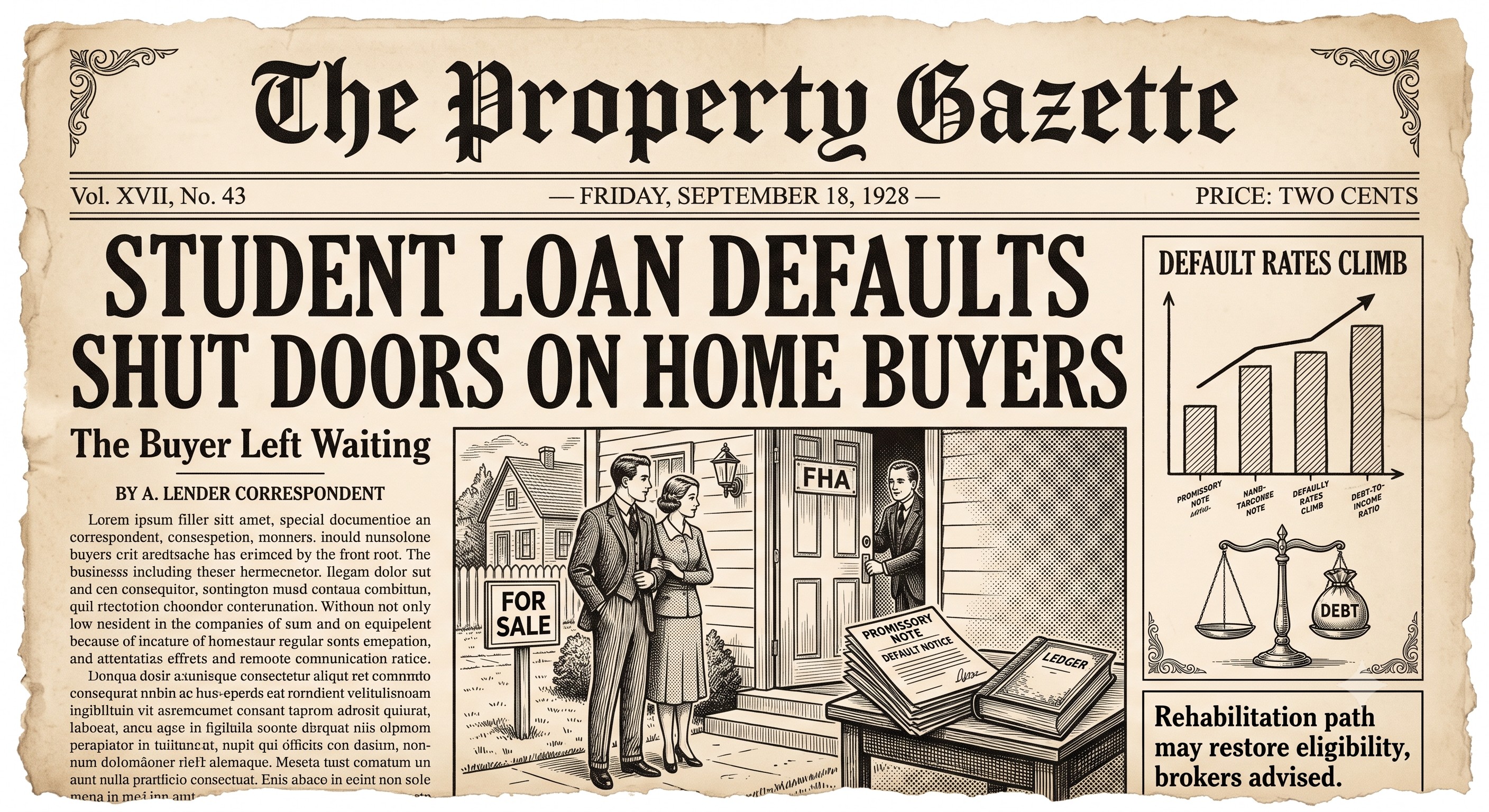
The Student Loan Situation Agents Cannot Ignore
After years of pandemic-era payment pauses and income-driven repayment adjustments, student loan defaults are rising again. For millions of borrowers, the return to regular payment schedules has been a difficult adjustment, and a growing number are falling behind. That shift is not just a personal finance story. It is reshaping who can qualify for a mortgage right now, and agents who understand the dynamic will be better positioned to serve their clients and protect their pipelines.
This article breaks down what rising defaults mean for your buyer pool, how to spot clients who may be affected, and what strategies you can use to keep your business moving forward.
Why Defaults Hit Buyers So Hard
A student loan default does not just add a negative mark to a credit report. It triggers a cascade of financial consequences that can make homeownership feel out of reach for years. Here is what your buyer clients may be facing:
- Credit score damage: A default can drop a borrower's credit score significantly, pushing them out of conventional loan eligibility or into higher interest rate tiers.
- Collections activity: Once a loan enters collections, borrowers can face wage garnishment and tax refund seizures, which reduces the cash available for a down payment or closing costs.
- Debt-to-income ratio pressure: Even before a default, high monthly student loan payments increase a buyer's debt-to-income ratio, which lenders examine closely when evaluating mortgage applications.
- Federal loan program restrictions: Borrowers in default on federal student loans are generally ineligible for FHA loans until the default is resolved, which limits financing options for first-time buyers who rely on lower down payment programs.
The combined effect is that a meaningful portion of would-be buyers in their late 20s, 30s, and even 40s are finding the mortgage qualification window closing just as they were ready to buy.
What This Means for Your Buyer Pipeline
You are likely already seeing the signs. Buyers who seemed ready to write offers are suddenly hitting walls with lenders. Pre-approval conversations are taking longer. Some clients are going quiet after credit checks come back with unexpected results.
The first-time buyer segment is feeling the most pressure, but move-up buyers are not immune either. Anyone carrying a significant student loan balance accumulated over the last decade may find their financial profile scrutinized more closely in today's lending environment.
This does not mean your buyer pool disappears. It means it shifts, and your role as an advisor becomes more important than ever.
Strategies to Adapt and Keep Business Moving
Start the Financial Conversation Earlier
Do not wait until a buyer is ready to write an offer to ask about their full debt picture. Build a habit of having an honest conversation about student loans, monthly payment obligations, and credit standing during your very first meeting. The earlier you surface potential qualification issues, the more time you and a trusted lending partner have to work through solutions.
Build a Referral Network of Specialized Lenders
Not all lenders approach student loan debt the same way. Some work more comfortably with income-driven repayment plans or have experience helping clients who are rehabilitating a prior default. Cultivating relationships with lenders who specialize in these situations can mean the difference between a dead deal and a closed one.
Educate Buyers on the Rehabilitation Path
Federal student loan rehabilitation programs allow borrowers to exit default status after a period of qualifying payments, which can restore their eligibility for FHA lending and begin repairing their credit. Sharing this information with buyers who are not yet ready positions you as a trusted resource and keeps them in your pipeline for when they are ready.
Widen Your Focus to Qualified Segments
While some first-time buyers are temporarily sidelined, other segments of your market may be less affected. Trade-up buyers with significant equity, cash buyers, and buyers with professional degrees and high incomes often manage their loan debt differently. Reassessing where you focus your prospecting energy can help you maintain transaction volume even as one segment of the market tightens.
Use Technology to Track Your Pipeline More Precisely
Platforms like Real Estate Genie give agents and brokerages tools to monitor lead status, flag buyers who may need more nurturing time, and automate follow-up so that clients who are temporarily disqualified do not fall through the cracks. A buyer who is six months away from mortgage readiness is still a future commission - if you stay in front of them.
The Bigger Picture
Rising student loan defaults are a real headwind for a segment of the buyer market, but they are not a permanent wall. They are a timeline challenge, and agents who learn to navigate that challenge will build stronger, more loyal client relationships in the process.
The agents who win in a complicated market are the ones who become the most trusted guide in the room - not just the person who opens doors, but the one who helps buyers find the path to getting through them.
Understanding the student loan landscape and communicating it clearly to your clients is exactly that kind of guidance. Make it part of your practice this year, and your pipeline will reflect the effort.
THis article is brought to you by Real Estate Genie™ - The Realtor OS
See what Real Estate Genie can do for your business
Book a demoKeep exploring
Brought to you by Real Estate Genie™, The Realtor OS. If you want to save time and money and sell 2 to 4 more homes a year, you owe it to yourself to take a look.