September 12, 2026
Untitled post
Lawsuits targeting major listing platforms over rental agreements are raising serious questions about data practices and agent liability. Here is what real estate professionals should watch closely.
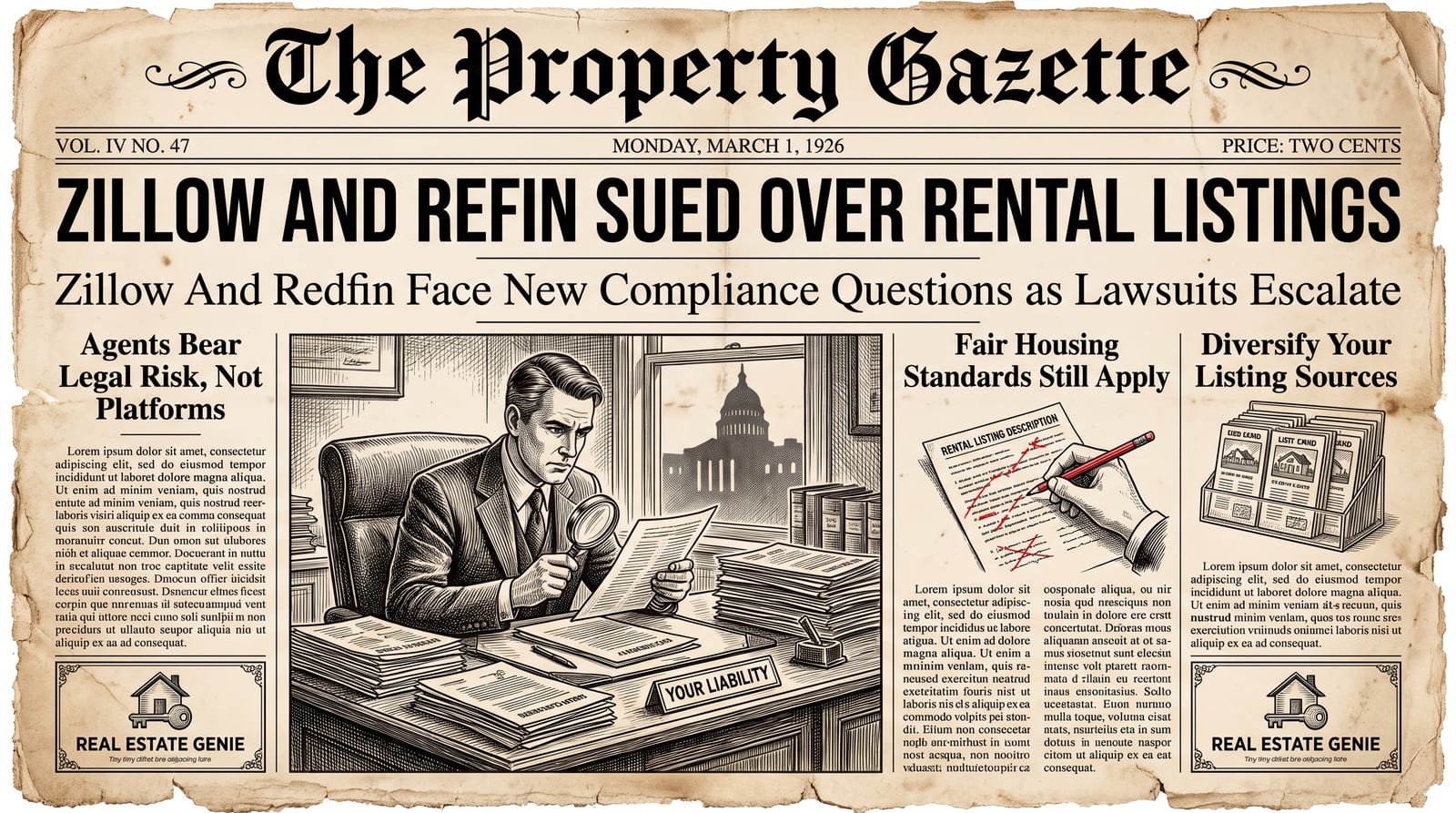
The Lawsuits at a Glance
Legal challenges targeting two of the most widely recognized real estate listing platforms have drawn significant attention across the industry. Lawsuits filed against Zillow and Redfin allege that certain rental agreement practices may have violated consumer protection laws and, in some cases, fair housing standards. While the litigation is still working through the courts, the implications for brokerages and independent agents are worth examining now rather than later.
It is important to note that litigation details evolve quickly, and agents should consult a licensed real estate attorney for legal guidance specific to their situation. What this article covers is the broader professional context and the practical steps you can take to protect your business and your clients.
Why This Matters for Agents and Brokerages
Many real estate professionals rely on large listing platforms to generate leads and market rental properties on behalf of landlord clients. When those platforms face legal scrutiny, the ripple effects can reach agents in several ways:
- Reputation risk: Clients may associate an agent with a platform that is in the news for the wrong reasons, even if the agent has no direct involvement in the dispute.
- Compliance exposure: If a platform's rental agreement language is found to be non-compliant with local or federal law, agents who directed clients toward those agreements could face questions about their own due diligence.
- Business continuity: Platforms under litigation sometimes change their terms of service, feature sets, or pricing structures in ways that disrupt existing workflows.
The Fair Housing Dimension
Some of the concerns raised in rental-related lawsuits touch on Fair Housing Act obligations. The Fair Housing Act prohibits discrimination in the sale, rental, and financing of housing based on race, color, national origin, religion, sex, familial status, and disability. Regulations at the state and local level often extend those protections further.
For agents and brokerages, the takeaway is straightforward: regardless of which platform you use to list or market a rental property, the Fair Housing responsibility belongs to you. A platform facing a lawsuit does not absorb your liability. Agents must ensure that every listing description, every application screening process, and every lease referral they facilitate meets Fair Housing standards.
The tool you use to market a property does not determine your legal obligations. Your license does.
Practical Steps to Protect Your Business
The current legal climate is a good reminder to review your own rental practices from top to bottom. Consider the following actions:
- Audit your listing language. Review every active rental listing you manage. Descriptions should focus on property features such as square footage, layout, amenities, and location proximity to services. Avoid language that could, even unintentionally, signal a preference for or against any protected class.
- Review the agreements you recommend. If you refer clients to any platform-generated lease or rental agreement, have a real estate attorney review that document periodically. Laws change, and template agreements from third-party platforms may not always keep pace.
- Diversify your marketing channels. Relying on a single platform for rental leads puts your pipeline at risk if that platform changes its terms, raises fees, or faces operational disruptions due to litigation. A diversified strategy gives you more stability.
- Document your compliance efforts. Keep records of how you screen rental inquiries, what criteria you apply, and how you communicate with applicants. Consistent, documented processes are your best defense if a dispute arises.
- Stay informed through your association. Your state or local REALTOR association will often issue guidance as litigation like this unfolds. Subscribe to those updates and attend any relevant continuing education sessions.
What to Tell Your Clients
Landlord clients and property investors may come to you with questions about what these lawsuits mean for their rental portfolios. Here is a straightforward way to frame the conversation:
The lawsuits involve corporate-level decisions made by large platform operators. Your client's individual rental property is governed by state landlord-tenant law, local ordinances, and the specific lease agreement in place. Your job as their agent is to make sure their marketing and application processes are fair, consistent, and legally sound - independent of whatever happens in a courtroom involving a technology company.
The Bigger Takeaway for Real Estate Professionals
Lawsuits against major listing platforms are a reminder that no technology tool is a substitute for professional judgment. Platforms can change overnight - through litigation settlements, new ownership, regulatory pressure, or simple business decisions. What does not change is your obligation to your clients and to the communities you serve.
Building a practice that is grounded in compliance, diversified across marketing channels, and supported by solid professional relationships gives you the resilience to navigate industry disruption - legal or otherwise.
If you are looking for tools that help you manage rental listings, track leads, and maintain compliance-friendly workflows all in one place, Real Estate Genie was built with exactly that kind of professional in mind.
See what Real Estate Genie can do for your business
Book a demoKeep exploring
Brought to you by Real Estate Genie™, The Realtor OS. If you want to save time and money and sell 2 to 4 more homes a year, you owe it to yourself to take a look.