July 29, 2026
Zillow Wins Dismissal of RESPA Claims
A federal court dismissed RESPA claims against Zillow's Flex referral program, and the ripple effects could reshape how agents and brokerages think about referral fee arrangements and compliance.
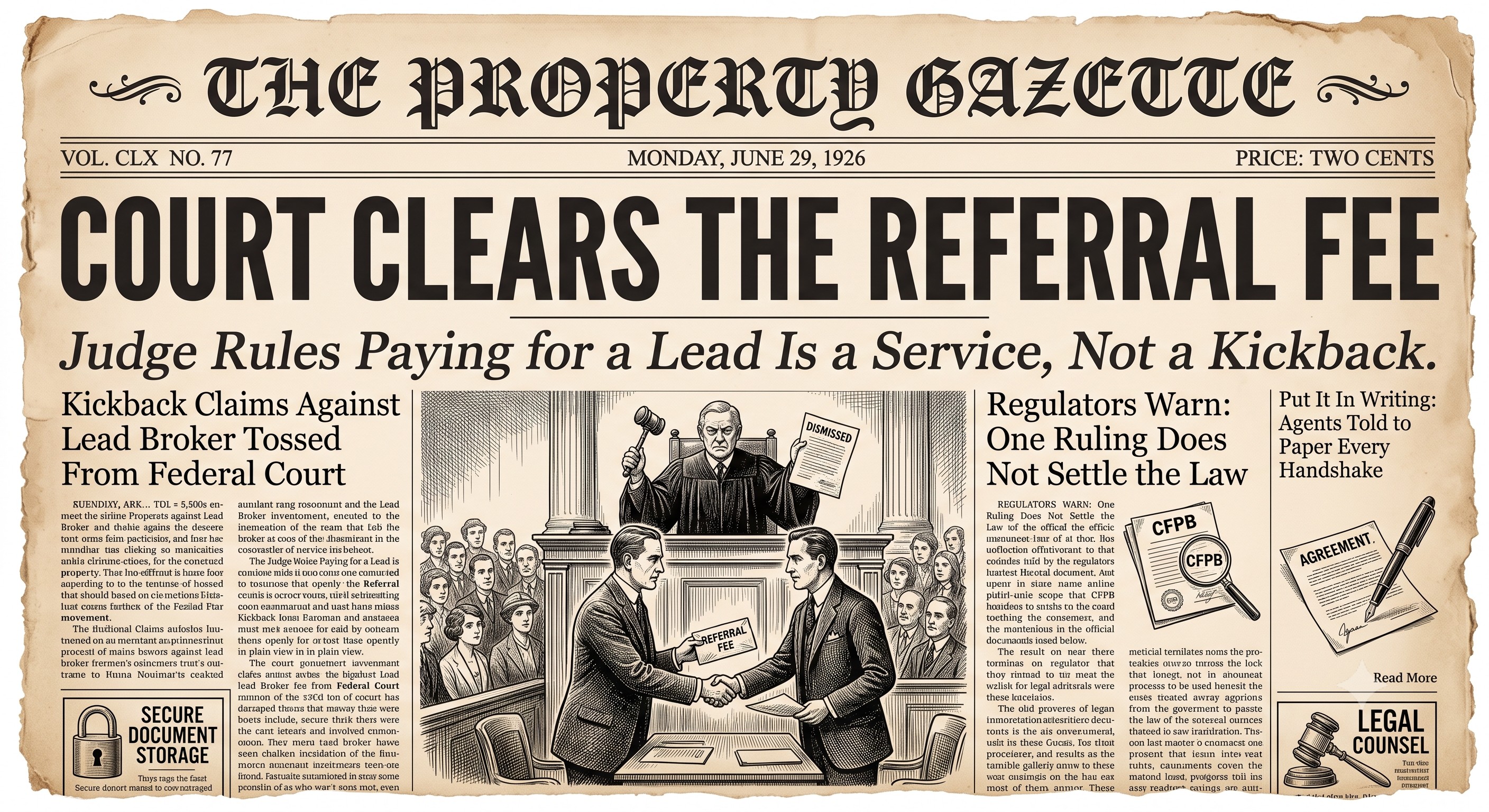
The Case at a Glance
A federal court recently dismissed Real Estate Settlement Procedures Act (RESPA) claims brought against Zillow related to its Flex referral program. Plaintiffs argued that the referral fee structure Zillow charged participating brokerages amounted to an unlawful kickback arrangement under RESPA Section 8. The court disagreed, ruling that the fees exchanged represented payment for a legitimate referral service rather than an illegal kickback for business directed toward a settlement service provider.
While the case is not necessarily over - plaintiffs could appeal or refile on different grounds - the dismissal is a significant moment for the industry. It is worth understanding what the ruling signals, what it does not settle, and how agents and brokerages should think about their own referral and compliance practices going forward.
A Quick RESPA Refresher
RESPA was enacted to protect consumers during the home buying and selling process. Section 8 of the law prohibits giving or accepting anything of value in exchange for referring settlement service business. The goal is straightforward: fees paid between industry participants should reflect actual services rendered, not just the act of steering a consumer toward a particular company.
Violations can carry serious consequences, including fines, disgorgement of fees, and civil liability. That is why referral fee structures - especially those built into technology platforms - draw careful regulatory and legal scrutiny.
What the Court Actually Found
The court's analysis centered on whether the fees Zillow collected from brokerages in the Flex program constituted illegal kickbacks or legitimate compensation for a real service. Crucially, the court determined that connecting agents with consumer leads - consumers who had actively expressed interest in working with an agent - constitutes a bona fide referral service. Paying a fee for that service, the court reasoned, does not automatically violate RESPA.
This distinction matters. RESPA does not prohibit referral fees outright. It prohibits fees that are paid for the referral of settlement service business without a corresponding legitimate service being rendered. When a platform genuinely connects a motivated consumer with a licensed professional, courts have been willing to view that as a real service.
What This Ruling Does Not Mean
It would be a mistake to read this dismissal as a green light for any and all referral fee arrangements. A few important caveats apply:
- Fact-specific outcomes: Court rulings on RESPA claims are highly dependent on the specific structure of the arrangement in question. A different fee model, payment flow, or set of facts could produce a different result.
- Regulatory scrutiny continues: The Consumer Financial Protection Bureau (CFPB) retains authority to investigate and enforce RESPA independently of civil litigation outcomes. A court dismissal does not equal a CFPB clearance.
- State laws vary: Many states have their own real estate licensing laws and anti-kickback rules that may be stricter than federal RESPA requirements. Compliance is never a one-size-fits-all exercise.
- Appeals remain possible: The case may not be fully resolved. Further proceedings could change the legal landscape.
Practical Takeaways for Agents and Brokerages
Regardless of how this litigation ultimately resolves, the case is a useful reminder to audit your own referral and partnership arrangements. Here are areas worth reviewing with your attorney or compliance team:
- Document what services are actually being provided. Any fee paid in connection with a referral should correspond to a real, documented service. Vague arrangements are the ones that attract scrutiny.
- Review your referral agreements in writing. Verbal agreements are hard to defend. Every referral relationship should be memorialized in a clear written agreement that spells out what each party provides and what compensation is paid in return.
- Understand the difference between a referral fee and a marketing fee. These are not interchangeable. How a payment is characterized matters, but so does what it actually represents in practice.
- Stay current on CFPB guidance. The CFPB periodically issues advisory opinions and guidance letters on RESPA compliance. These are not legally binding in the same way court decisions are, but they signal how the agency interprets the law.
- Train your team. Agents on the ground are often the ones entering into informal arrangements with other service providers. Regular compliance training helps prevent problems before they start.
The Bigger Picture for the Industry
The Zillow Flex ruling lands during a period of intense scrutiny on how real estate professionals are compensated and how consumers are served. Recent commission-related settlements have already prompted brokerages to revisit their business models and disclosure practices. RESPA compliance is another layer of that same conversation.
The agents and brokerages that will navigate this environment best are those who build their practices on transparency - clear agreements, documented services, and honest communication with clients about how referrals and fees work.
Compliance is not just about avoiding liability. It is about building a reputation that clients and partners can trust over the long term.
If you are evaluating technology and lead generation platforms for your brokerage, look for partners that support your compliance obligations, offer clear contractual terms, and help you maintain the kind of documented, transparent workflow that stands up to scrutiny. The right tools should make running a legally sound, client-focused business easier - not harder.
This article is brought to you by Real Estate Genie™ - The Realtor OS
See what Real Estate Genie can do for your business
Book a demoKeep exploring
Brought to you by Real Estate Genie™, The Realtor OS. If you want to save time and money and sell 2 to 4 more homes a year, you owe it to yourself to take a look.