July 30, 2026
Zillow Fires Back: A Review Of Compass Latest Claims On Private Listings Data
The battle over private listings data is reshaping how agents think about exposure, seller choice, and where deals actually get done. Here is what the argument is really about and how to protect your clients.
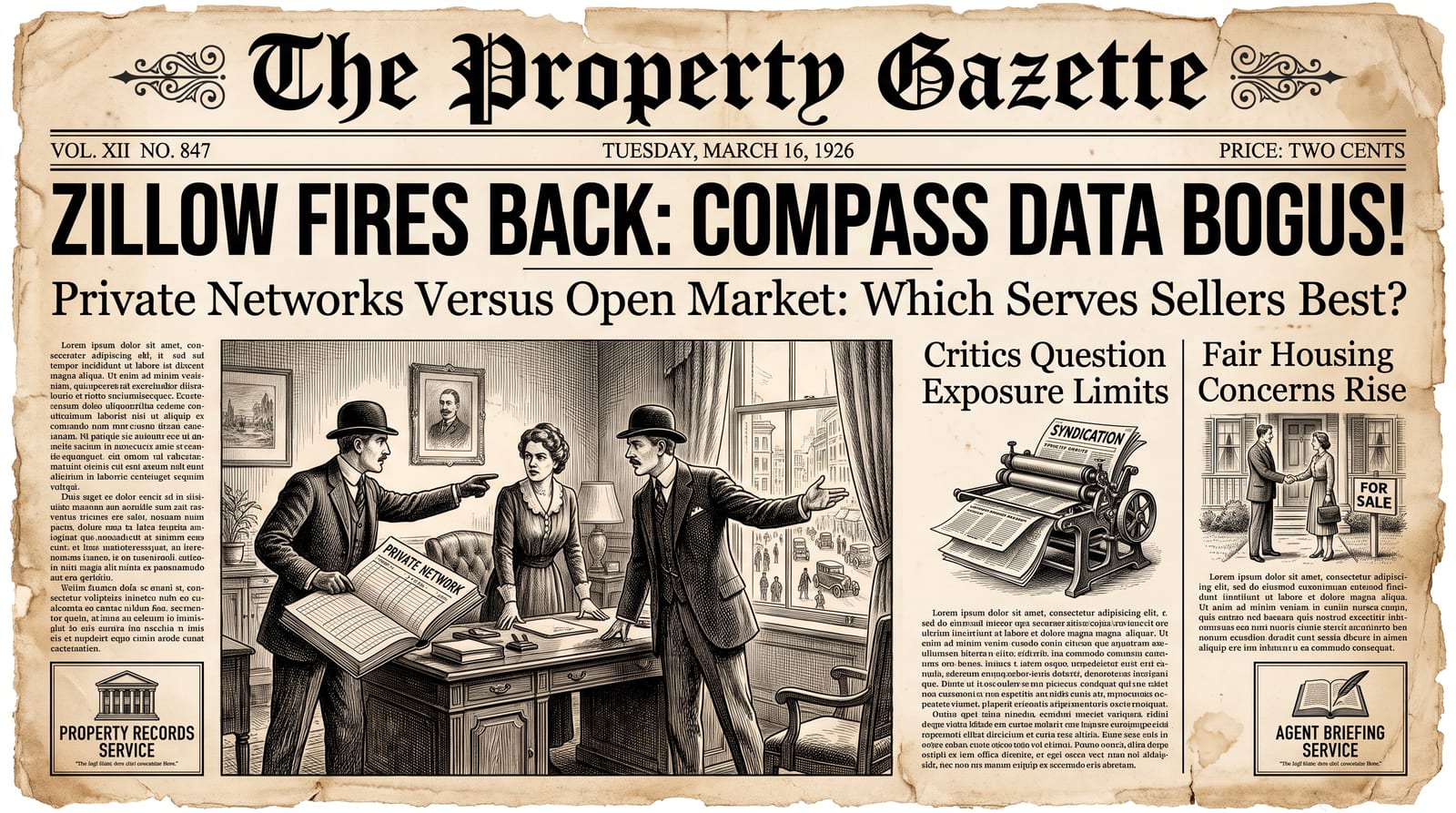
A Fight Over Listings That Could Reshape Your Business
The real estate industry rarely generates drama that actually matters to working agents. The ongoing dispute between two of the country's most visible real estate brands is an exception. At its core, the argument is about who controls private listings data, what that control means for sellers, and whether keeping a home off public portals before going live is a strategy or a disservice.
Whether you side with one company or the other, the debate raises questions every agent needs to think through carefully. Your clients are watching, and they will ask you about it.
What Compass Claims
Compass has argued that its private listings network gives sellers a meaningful advantage. The pitch goes something like this: by allowing a home to circulate quietly among a curated group of buyers before a full public launch, sellers can test price, generate early buzz, and avoid the stigma of a listing that sits too long on the open market.
Compass describes this as a seller-first strategy, one that puts control in the hands of the homeowner rather than the algorithm. The company points to transaction data it says supports the model, arguing that homes moving through its private network sell for competitive prices without sacrificing seller outcomes.
How Zillow Is Pushing Back
Zillow's counter is blunt. The company has argued that limiting a listing's exposure before it hits the public market almost always harms sellers. Their position is grounded in a straightforward economic argument: more buyers competing for a home produces better offers. A private network, no matter how well-connected, is a smaller pool of buyers than the entire market.
Zillow has also raised questions about the data Compass uses to support its claims, suggesting the methodology behind those numbers does not hold up to scrutiny. The implication is pointed - if private listings truly delivered better outcomes, you would see it clearly and consistently in the numbers.
Zillow responded by updating its own policies around listings that are withheld from public syndication, taking a harder line on what it will and will not display based on how broadly a listing is shared.
The Fair Housing Dimension
This is the part of the conversation that carries the most weight, and it does not get discussed enough. Critics of private listing networks have raised concerns that routing homes through a select group of buyers before public exposure can, intentionally or not, reduce access for certain buyers.
Fair housing law is clear that any practice with a disparate impact on protected classes is a serious legal and ethical problem, even when no discrimination is intended. Agents operating in any kind of pocket listing or pre-market environment should understand that the private nature of the network does not insulate them from scrutiny.
This is not a hypothetical concern. Regulators have shown increasing interest in how listings move through the market and who gets access to them. Protecting your clients means protecting all clients equally.
What This Means for Independent Agents and Brokerages
If you are not affiliated with either company, you might be tempted to watch this play out from the sidelines. That would be a mistake. Here is why the outcome affects you directly:
- Seller expectations are shifting. Clients are hearing the phrase "private listings" and asking about it. You need a clear, honest answer about what that strategy delivers and what it costs in terms of exposure.
- Portal policies are changing. If you rely on public portals for buyer leads, changes to what gets displayed and when will affect your pipeline. Stay current on syndication rules.
- Data transparency matters. When a seller asks whether a pre-market strategy is right for them, you should be able to point to real, verifiable outcomes in your local market, not talking points from either side of a corporate argument.
- Your fiduciary duty is the baseline. Whatever any company claims, your obligation to your clients requires that you present options that genuinely serve their interests, not the interests of a platform.
How Real Estate Genie Helps You Stay Above the Noise
At Real Estate Genie, we built our platform around one idea: agents who have better information make better decisions for their clients. Our tools connect your MLS data, CRM, and property insights in one place so you can have informed conversations about listing strategy without relying on anyone else's marketing materials.
When a seller asks whether they should go private or go public, you will have the local data to give them a real answer. When policies shift at the portal level, your workflow adjusts without you rebuilding it from scratch.
The Bottom Line
The Zillow and Compass dispute is not going to resolve itself quietly. Expect more data claims, more policy changes, and more client questions. The agents who come out ahead will be the ones who understand the actual tradeoffs, stay current on the rules, and keep their clients' interests at the center of every listing conversation.
That is not a corporate position. That is just good practice.
Brought to you by Real Estate Genie™ - The Realtor OS
See what Real Estate Genie can do for your business
Book a demoKeep exploring
Brought to you by Real Estate Genie™, The Realtor OS. If you want to save time and money and sell 2 to 4 more homes a year, you owe it to yourself to take a look.