August 4, 2026
Zillow Lays Off Over 500 Employees
Zillow recently laid off more than 500 employees, signaling a broader shift in the real estate technology landscape. Here is what agents and brokerages should know and how to respond.
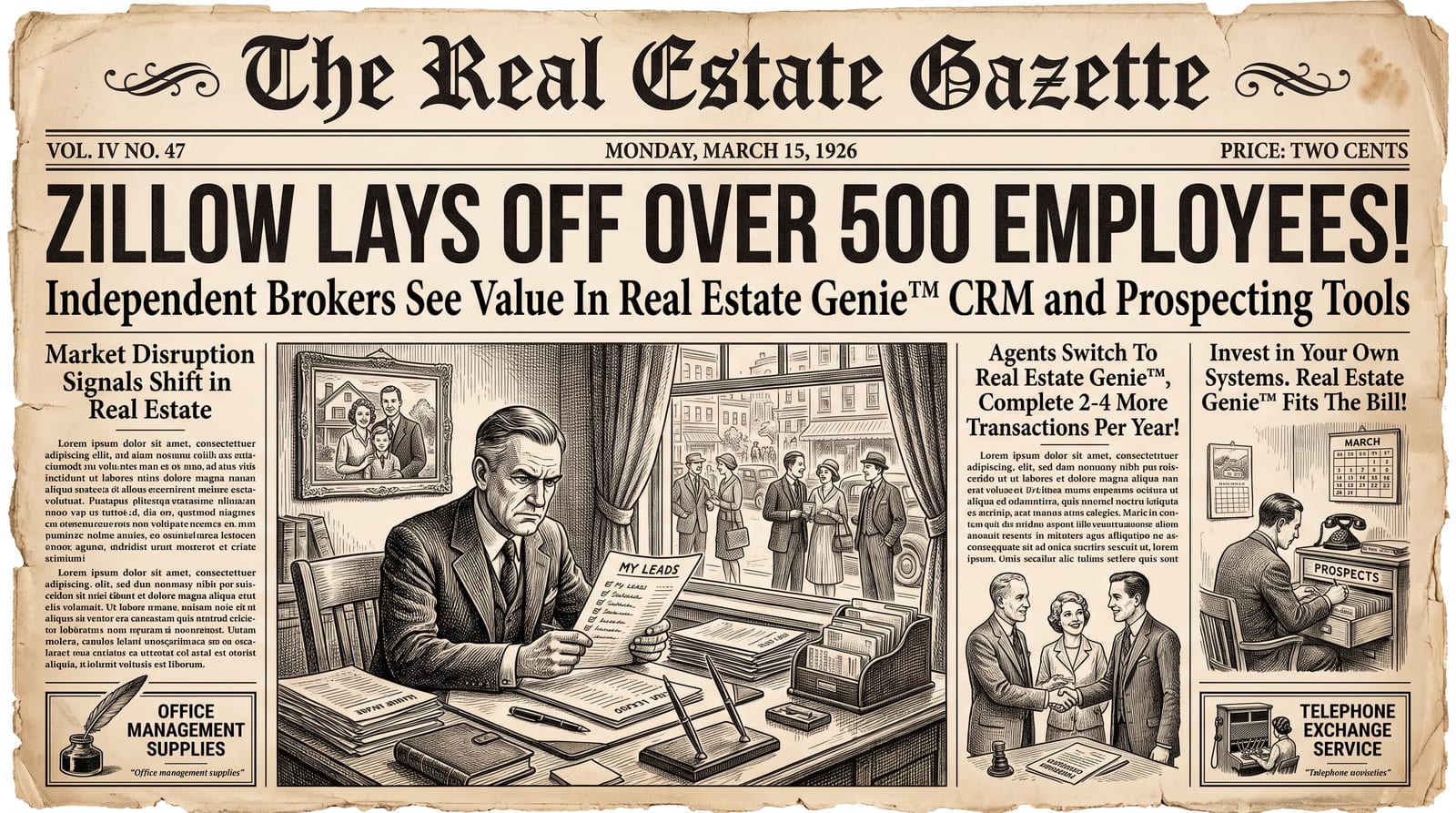
Zillow Cuts Over 500 Jobs: A Signal Worth Paying Attention To
Zillow recently announced layoffs affecting more than 500 employees, a significant workforce reduction that sent ripples through the real estate industry. For agents and brokerages watching from the sidelines, the move raises a straightforward question: what does this mean for how you run your business?
The short answer is that shifts at large portals tend to create both uncertainty and opportunity. Understanding what is happening and why puts you in a stronger position to act, rather than react.
Why Large Portals Are Pulling Back
Portal companies expanded aggressively during the pandemic-era housing boom, hiring heavily to build new products and capture market share. When transaction volume dropped and interest rates rose, those bets became expensive to carry. Layoffs at scale are often the result of a company recalibrating its cost structure to match a slower market.
This is not unique to one company. The broader real estate technology sector has seen a wave of consolidation, restructuring, and headcount reductions over the past two years. What it tells us is that the era of cheap money funding unlimited portal growth is over. Portals are now focused on profitability, which means their priorities may not always align with yours.
What This Means for Agents Who Rely on Portal Leads
If a meaningful portion of your business depends on leads purchased from large listing portals, this is a good moment to reassess. Here is what to consider:
- Product changes can happen quickly. When a portal goes through layoffs, the teams supporting agent-facing tools, lead products, and customer service shrink. Response times slow, features get deprecated, and pricing structures shift.
- Your exposure to a single source increases your risk. Relying on one portal for the majority of your leads is similar to relying on one listing for the majority of your income. Diversification is not just smart, it is necessary.
- You may be paying more for less. As portals tighten up, the value of paid lead programs can deteriorate while prices stay flat or increase. Tracking your actual cost per closed transaction from portal sources is essential right now.
The Case for Owning Your Own Pipeline
The agents and brokerages who weather market disruptions best are the ones who have built pipelines they control. That means a strong sphere of influence, a healthy database of past clients and prospects, and marketing systems that do not depend on a third-party portal staying healthy.
Here are the areas worth investing in right now:
- Your CRM. A well-maintained client database is your most valuable business asset. If contacts are scattered across spreadsheets, old email threads, or a portal dashboard you do not own, consolidating them into a dedicated CRM should be your first move.
- Your own website and local SEO. Ranking organically for local real estate searches puts you in front of buyers and sellers without paying a portal for the privilege. Content, reviews, and consistent local listings all contribute.
- Automated follow-up. Most leads do not convert on the first contact. An automated nurture sequence keeps you top of mind for prospects who are six to eighteen months away from being ready to transact.
- Referral systems. Past clients who refer new business are the most cost-effective lead source available. A simple, consistent outreach plan keeps those relationships warm.
Technology Should Work for You, Not the Other Way Around
One of the clearest lessons from the recent wave of real estate tech disruption is that agents need tools that serve their business model, not tools that make the agent a product. Portals generate revenue by selling access to consumers who came looking for homes. Agents are often just a means to that end.
The right technology stack puts you at the center. That means a platform where your leads are your leads, your client data is yours to keep, and your marketing is building your brand rather than someone else's. When a portal restructures, your business should not feel it.
The agents who thrive through market disruption are the ones who have built businesses on relationships and owned pipelines, not rented audiences.
How Real Estate Genie Helps You Stay Independent
Real Estate Genie is built around the idea that agents and brokerages deserve tools that put their interests first. From an integrated CRM and AI-powered lead follow-up to MLS connectivity and automated marketing, the platform is designed to help you build a pipeline you own and a brand that stands on its own.
When large portals restructure, Real Estate Genie agents keep moving forward because their business is not built on someone else's platform. If you have been looking for a sign to invest in your own infrastructure, this might be it.
Ready to take control of your pipeline? Explore Real Estate Genie and see how it fits your business.
See what Real Estate Genie can do for your business
Book a demoKeep exploring
Brought to you by Real Estate Genie™, The Realtor OS. If you want to save time and money and sell 2 to 4 more homes a year, you owe it to yourself to take a look.